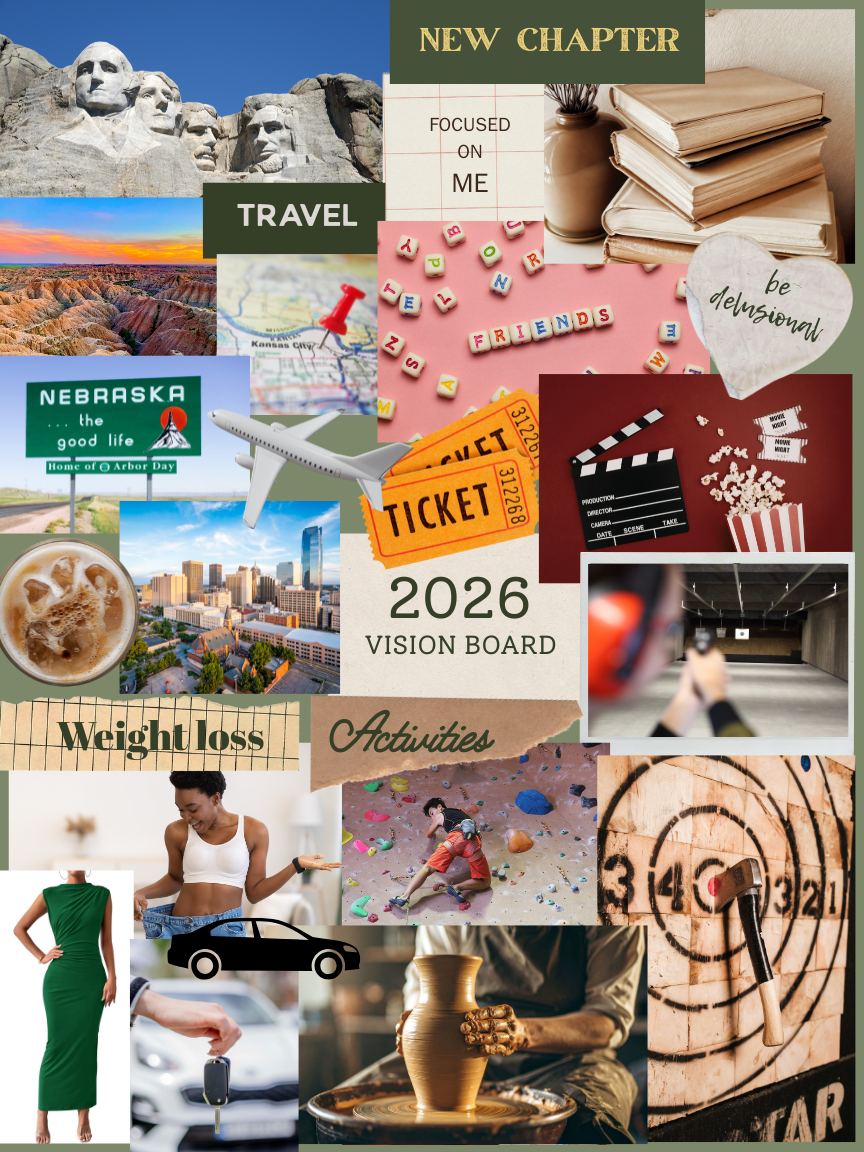
I created my original vision board before December 21, fully intending to talk about it weeks ago. But after everything that’s happened, it no longer fit where I am mentally or emotionally. Instead of forcing myself to stick to something that no longer resonated, I chose to start again.
That decision alone felt like progress.
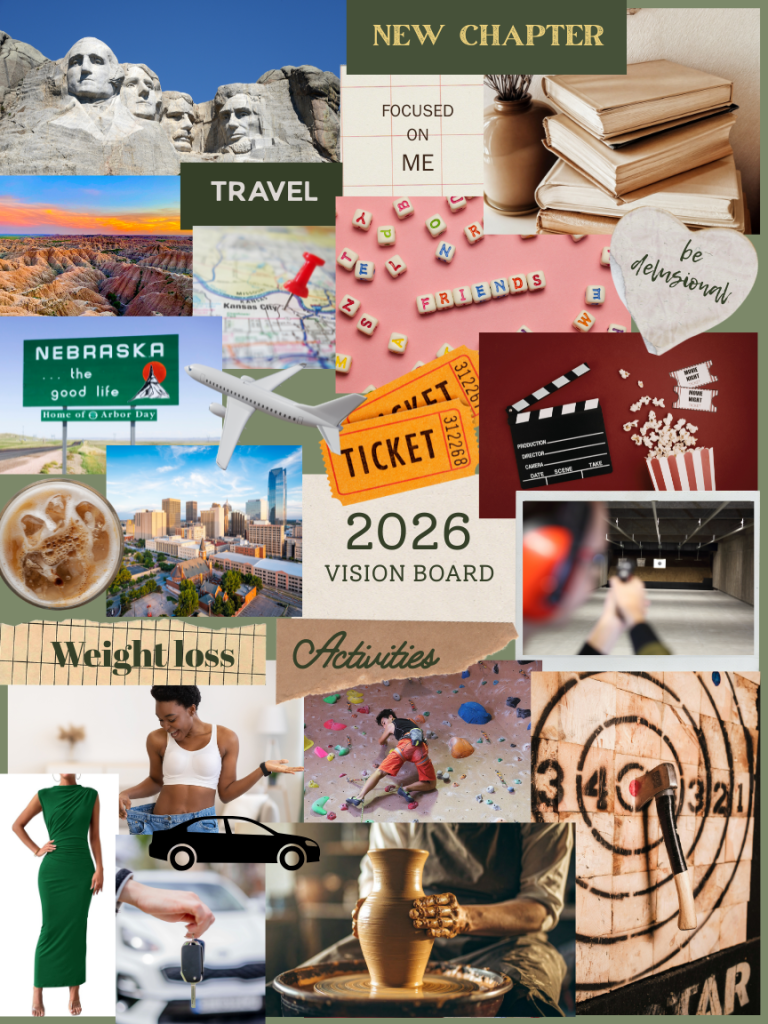
Vision Boarding as a Reset, Not a Manifestation Tool
For me, vision boarding this year wasn’t about manifesting outcomes or chasing material goals.
It was about resetting my environment and my mindset.
Before touching the board, I did a deep reset of my space—getting rid of bedding, towels, containers, décor, and anything that felt heavy, unnecessary, or tied to old energy. I needed less around me, not more.
Once the physical clutter was gone, I could finally sit with myself and ask:
- What do I actually want to feel this year?
- What needs to leave my life?
- What deserves protection?
That’s where this vision board came in.
What I Intentionally Left Off My Vision Board
One of the most important choices I made was deciding what not to include.
There’s no money imagery.
No job titles.
No hustle language.
Not because those things don’t matter—but because they’re already being worked on.
This board isn’t about pressure. It’s about priorities.
My 2026 vision board focuses on:
- Peace
- Health
- Emotional stability
- Movement
- Simplicity
- Enjoyment
These are the things that actually support everything else.
Why This Vision Board Feels Different
This board isn’t loud. It isn’t crowded. And it isn’t aspirational in the traditional sense.
It reflects what matters right now, not what I think should matter.
After a difficult mental stretch, I needed something grounding—something that reminds me daily of what I’m protecting, not what I’m chasing.
That’s why this version finally feels right.
Vision Boards Are Allowed to Change
If there’s one thing I want to be clear about, it’s this:
You’re allowed to redo your vision board.
You’re allowed to change your goals.
You’re allowed to pivot mid-year—or mid-week.
Vision boards are not contracts. They’re checkpoints.
And sometimes the most powerful thing you can say is:
“This no longer fits who I am.”
Then you create something that does.
Digital Vision Board Options (If You Don’t Want to Use Paper)
If cutting magazines and using poster board doesn’t appeal to you—or you want something easier to update—digital vision boards are a great alternative. They’re flexible, low-cost, and easy to revisit throughout the year.
Here are a few options, depending on how you like to work:
1. Canva (Beginner-Friendly and Visual)
Canva is one of the easiest tools for creating a digital vision board.
You can:
- Use a blank canvas or a vision board template
- Drag and drop images, words, and affirmations
- Customize colors, fonts, and layouts
- Download it as an image or PDF
Many people save their Canva vision board as:
- Their phone or tablet wallpaper
- A desktop background
- A printable page for a planner or journal
This is a great option if you want something polished without a learning curve.
2. Pinterest Boards (Exploratory and Low Pressure)
Pinterest works well as a living vision board, especially if you’re still figuring things out.
You can:
- Create a private board
- Pin images, quotes, moods, colors, and ideas
- Let themes emerge over time
This is ideal if you don’t want to lock yourself into a final version right away.
3. Notes App or Google Docs (Written Vision Boards)
If visuals aren’t your thing, a written digital vision board can be just as effective.
You can:
- List values, intentions, and priorities
- Write short descriptions of how you want your life to feel
- Update it throughout the year as things change
This works especially well for people who process through language rather than imagery.
4. Tablet + Stylus (Creative and Personal)
If you use a tablet, you can create a vision board using a drawing or note-taking app.
This allows you to:
- Combine handwriting, images, and sketches
- Keep everything digital without physical clutter
- Make it feel personal and expressive
It’s a great middle ground between physical and fully digital.
Choosing the Right Format
There’s no “right” way to make a vision board.
What matters is:
- You’ll actually look at it
- It reflects where you are now
- It feels supportive, not stressful
Whether it’s physical, digital, visual, or written—your vision board should feel like an anchor, not an obligation.
And remember: you can always change it.
A Question for You
Have you made a vision board yet?
Are you planning to make one?
Or did you make one—and realize it needs to change?
If you’re comfortable sharing, I’d love to hear how you’re approaching this year. Sometimes the reset is the work.
-Irene






 Simply Irene
Leave a comment